




Rotary Drum Granulation Line
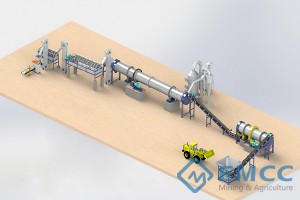
Production Line Overview
Production Line Specifications
Parameter | Details |
Suitable Raw Materials | Livestock manure, straw, biogas residue, sludge, food waste, organic waste, etc. |
Granulation Method | Drum agglomeration (wet process) |
Capacity Range | 3–30 t/h (customizable) |
Pellet Shape | Spherical or oval, diameter 2–8 mm |
Drying Method | Rotary drum dryer with heat sources: coal, gas, oil, or biomass |
Final Moisture Content | ≤15% |
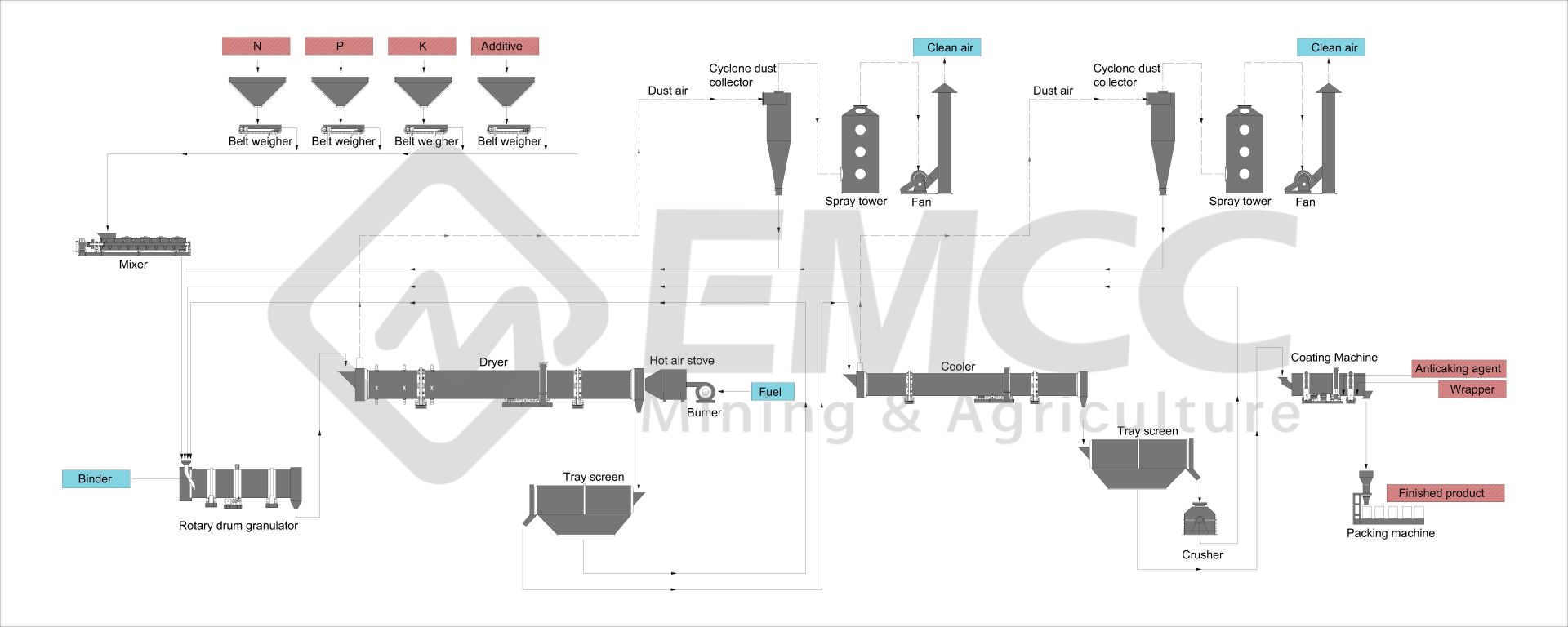
Line Configuration | Batching, crushing, mixing, granulation, drying, cooling, screening, coating, packaging, dust collection |
Batching, crushing, mixing, granulation, drying, cooling, screening, coating, packaging, dust collection
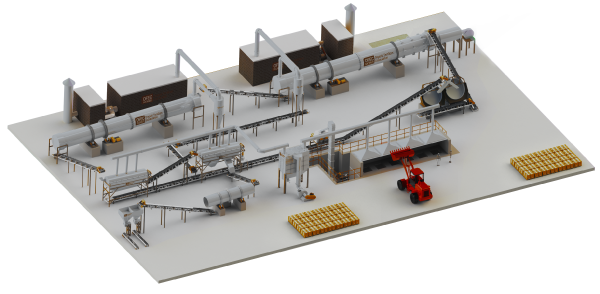
Working Principle of Organic Fertilizer Granulation
Drum granulation is a wet agglomeration process. The principle: inside a rotating, inclined drum, materials tumble and roll due to the drum’s rotation. Simultaneously, water, steam, or binding agents are sprayed to moisten fine powders, causing them to collide, compress, and adhere into small aggregates. As the drum continues rotating, the aggregates gradually densify and round into pellets. When they reach the desired size, they discharge from the outlet. After drying, cooling, and screening, the final product is high-strength, uniform organic fertilizer granules.
Advantages and Disadvantages for Organic Fertilizer Granulation
Advantages
● High Capacity: Single unit can handle up to 30+ t/h, ideal for large-scale, industrial production.
● Aesthetic Granules: Round, smooth pellets with good commercial value and market acceptance.
● Wide Raw Material Adaptability: Handles materials with 25%–35% moisture content; suitable for various feedstocks with pre-conditioning.
● Continuous Operation: Designed for 24/7 production with high automation and low labor costs.
● High Pellet Strength: Rolling compaction produces strong granules resistant to breakage during storage and transport.
Disadvantages
● Higher Initial Investment: More expensive than disc or extrusion lines.
● Higher Energy Consumption: Requires drying system – both thermal and electrical energy consumption are relatively high.
● Large Footprint: Long production line needs ample space.
● Dust Control Requirements: Inlet/outlet and screening sections may generate dust; efficient dust collection is essential.
Batching, crushing, mixing, granulation, drying, cooling, screening, coating, packaging, dust collection

Contact a Process Engineer to evaluate the technical solution.
Donne: donne@emccindustry.com
OFEC Drum Granulation Line Advantages
Proven Process
Customizable Drum Materials
Tailored Lifting Flights
Intelligent Control System
Turnkey Delivery
Complete eco-support
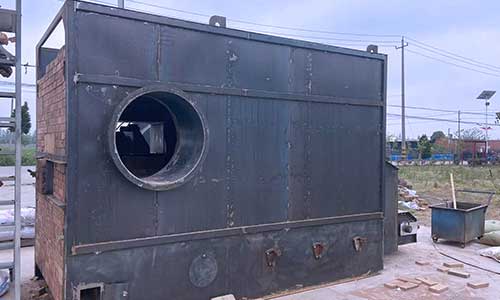
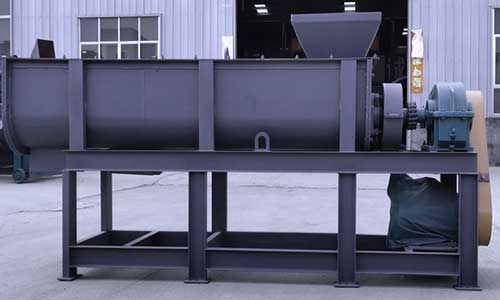
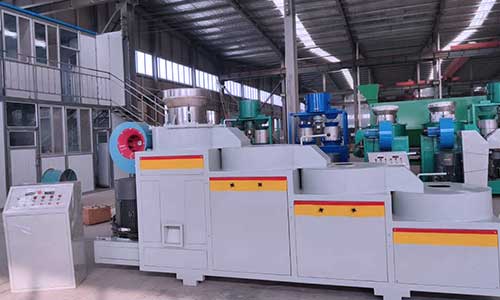
Equipment List of the Drum Granulation Line
Equipment | Function |
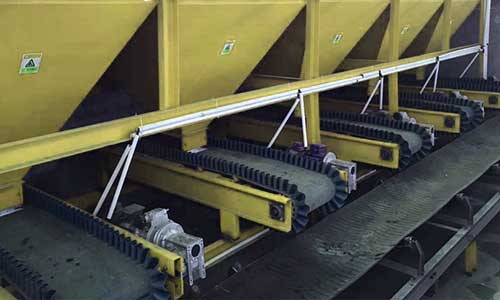
Batching System | Continuous batching of 2–8 materials with precise ratio control |
Crusher | Vertical/horizontal chain crusher – reduces large lumps to suitable particle size |
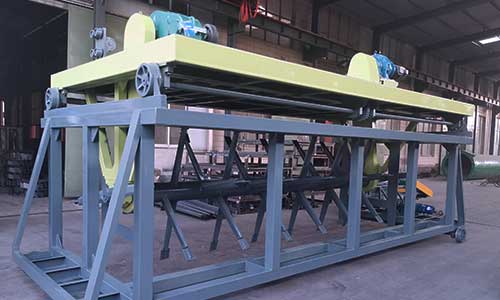
Mixer | Twin-shaft mixer – uniformly blends materials, moisture, and binders |
Drum Granulator | Core equipment; drum diameter 0.8–4.5 m, capacity 1–200 TPH (typical for organic fertilizer: 3–30 TPH) – rolling agglomeration |
Dryer | Rotary dryer – reduces pellet moisture to safe storage level |
Cooler | Rotary cooler – lowers pellet temperature, prevents moisture regain |
Screener | Trommel or vibrating screen – separates finished pellets from returns |
Coating Machine | Optional – applies anti-caking agent or functional coating |
Packaging Machine | Ton bag, open-mouth bag, or valve bag options; auto palletizing available |
Conveying System | Belt, bucket, or screw conveyors – connects all equipment |
Dust Collection System | Pulse jet bag filter – controls dust emissions |
Combustion Unit / Boiler | Provides heat for the dryer; works with gas, oil, biomass, etc. |
Equipment
Function
Cooler
Resources
Техническое обслуживание Барабанных Грануляторов
Барабанный гранулятор является одним из ключевых оборудований в промышленности сложных
Подробный процесс производства органического удобрения из птичьего помета методом гранулирования в роторном барабане
Переработанный навоз домашнего скота (навоз КРС, овечий помет, куриный помет